Department of Sociology and Anthropology
The Department of Sociology and Anthropology at Carleton University is one of the oldest and most highly regarded departments within its disciplines in Canada. Offering undergraduate and graduate programs in Sociology and Anthropology, and a Minor in Community Engagement, our department is a lively hub of academic research, training, and learning. In both disciplines, we offer the full range of academic programs, from B.A. to Ph.D.
We are also part of a joint initiative offering a Bachelor of Global and International Studies with two different specializations. Our interdisciplinary programs offer courses and supervision in a wide range of areas that encompass sociological and anthropological theory and methods, applied research training, community engagement, and critical analysis.
Explore

Courses

Student Life

Teaching Hub
-
Apr 15
The End of College Football: A Conversation with Derek Silva and Nathan Kalman-Lamb
-
11:00 AM to 1:00 PM
-
Hybrid Event
-
The Department of Sociology and Anthropology Calls on Carleton University to Retract Proposed Institutional Impartiality Policy
The Department of Sociology and Anthropology strongly objects to the proposed Institutional Impartiality Policy and calls on the University to retract this proposal and refrain from any attempt to undermine the autonomy of academic units in acting according to their mission and principles of scholarly rigour.
Sociologists and anthropologists have a long history of engaging with the public on matters of social, political, and academic debate, and our department is proud of its tradition of public engagement and scholarship. Taking clear and public stances on matters of public debate is a key part of our scholarly identity and the educational experience we promise to students. Our department recruits and attracts students precisely because we take principled stands on urgent social and political issues. Indeed, it is due to these practices that our Provost has called our department the “moral compass of the university”. To now prohibit such engagement would undercut the very values that draw students to our department and, thus, threaten its intellectual vitality.
Further, a requirement of “impartiality” is prima facie absurd. Nearly every topic that we study, as well as how we study it, can be conceived to be “political” or “partial”. Every choice that is made in teaching social history and social structure can be conceived or construed as “partial”. Outcomes such as “social justice” are political. Equity, diversity, and inclusion are political. The Kinàmàwagin Calls to Action are not impartial, nor should they be. Carleton’s own reputation and recruitment practices already depend on visible commitments to social justice, equity, and community engagement. We urge our university to remain committed to these values.
As an institution, the university has the responsibility to protect academic freedom for all members of its community, be they individuals or collectives. In its spirit, the university is nothing other than the commitment to the free and open exchange of evidence-based ideas and opinions. In its administrative organization, higher levels must strive to guarantee this right for lower levels – departments for individuals, faculties for departments, the president for all of these levels. By limiting the concept of academic freedom to individuals, the proposed policy betrays the idea of the university and opens it to political and economic instrumentalization.
The recent attacks on academics and institutions of higher education in the United States, as elsewhere, are evidence how easily academic “impartiality” becomes merely a codeword for what a regime in power considers acceptable; the notion of “impartiality” is, in these contexts, politically driven and an anathema to evidence-based study and debate in a democratic society. The proposed policy is consistent with the dangerous and rapid erosion of academic freedoms in many parts of the world, and it does not belong at universities.
As academics, we remain partial to rigorous debate, the study of things that matter, and pursuing justice. We look forward to continuing to offer these gifts to Carleton’s Academic Plan and broader societal mission of being, as our fundraising initiative puts it, “Here for Good.”
News
-
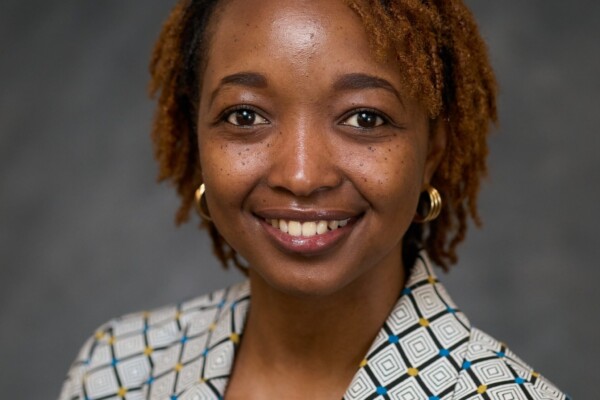
Joy Karinge Receives Flight 302 Legacy Award
We are happy to share that Joy Karinge, PhD Anthropology student, has been selected as a recipient in the 2025–2026 cohort of the Flight 302…
-
Dr. Cihan Erdal has been awarded a SSHRC Postdoctoral Fellowship
Dr. Cihan Erdal has been awarded a SSHRC Postdoctoral Fellowship for 2026–2028, and will be joining the Centre for Drama, Theatre & Performance Studies (CDTPS)…
-
Dr. Tonya Davidson Featured on CBC’s Ottawa Morning Defending the Social Sciences
Dr. Tonya Davidson, Sociology Professor, was recently featured on CBC’s Ottawa Morning with Rebecca Zandbergen, where she discusses the value of the social sciences and…