Linguistics
Linguistics is the scientific study of human language. It explores the unconscious knowledge that speakers have about language, in particular the relationship between sound and meaning, which is at the core of language as a system of communication.
Linguists study the structure and representation of language at various levels: sounds (phonetics and phonology), words (morphology), phrases and sentences (syntax), and meaning (semantics). They also investigate questions about language universals and typology, the historical development and changes in language over time, the acquisition of language by children and adults, the processing of language in the mind/brain, the neuro-cognitive mechanisms of language, and communication disorders. Linguistics is an interdisciplinary field that investigates language from theoretical, descriptive and experimental perspectives.
-
- systematically structured to ensure a smooth transition from basic to advanced courses
- exceptional in their combined areas of specialization: linguistic analysis, diverse theoretical and experimental frameworks, language documentation, endangered languages
- research-oriented, offering a variety of research-intensive courses (independent study, tutorial, honours thesis) and opportunities for research assistantships.
Undergraduate Programs in Linguistics
What does it mean to know a language? How do we acquire languages? How and why do languages change over time? Our innovative Linguistics programs investigate these questions and so much more about language.
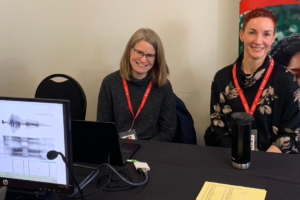
Bachelor of Arts (BA) in Linguistics
BA // BA Honours // BA Honours with Concentration in Psycholinguistics and Communication Differences // BA Combined Honours // BA Combined Honours in Linguistics & Discourse Studies // Minor in Linguistics

Bachelor of Science (BSc) in Linguistics
BSc Honours // Concentrations in Computer Science, Neuroscience, and Psychology are available
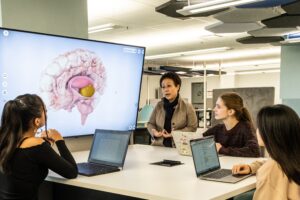
Bachelor of Science (BSc) in Psycholinguistics & Communication Differences
BSc Honours // Concentrations in Computer Science, Neuroscience, and Psychology are available
We offer a concentration in Psycholinguistics and Communication Differences (previously Psycholinguistics & Communication Disorders) in the BA Honours program, and we also offer a BSc Honours in Psycholinguistics and Communication Differences. The Psycholinguistics and Communication Differences (PCD) concentration and program focus on language processing, language acquisition, speech and language disorders, experimental design, data analysis, and clinical applications of linguistic theory.
Qualified students in Psycholinguistics and Communication Differences have the opportunity to take a practicum course that provides clinical experience in speech-language pathology.

We also offer a Certificate in Teaching English as a Second Language (CTESL), which can be taken concurrently with a BA Honours in Linguistics or as part of an Honours degree in another discipline. It can also be taken as a post-degree certificate. Learn more.
Graduate Programs in Linguistics
Graduate Diploma (GDip) in Linguistics
The Graduate Diploma (GDip) in Linguistics is a graduate minor for current Carleton graduate students in other fields who are doing language-related work.
Master of Arts (MA) in Linguistics
Our MA in Linguistics exposes students to the core foundations of the field while providing opportunities for interdisciplinary research.
Doctor of Philosophy (PhD) in Linguistics
Our PhD is a flexible and individualized program allowing students to explore many areas of the field, including theoretical, experimental, and documentary linguistics.
Accelerated Pathway for Graduate Studies
The Accelerated Pathway is a plan of graduate study for undergraduate students in their final year of a Carleton BA Honours degree. It allows students to take up to 1.0 credit at the 5000-level while completing their Honours degree.
Upon admission to the MA in Linguistics, students in the accelerated pathway receive advanced standing for coursework completed at the 5000-level.
Future Opportunities | What Can I Do With a Degree in Linguistics?
Graduates from our Linguistics programs acquire valuable skills in analytic reasoning, argumentation, scientific research methods and communication. There are many career opportunities for Linguistics graduates, including speech-language pathologist, linguistic policy researcher, forensic linguist, translator/interpreter, lexicographer, ESL teacher, and language materials developer.
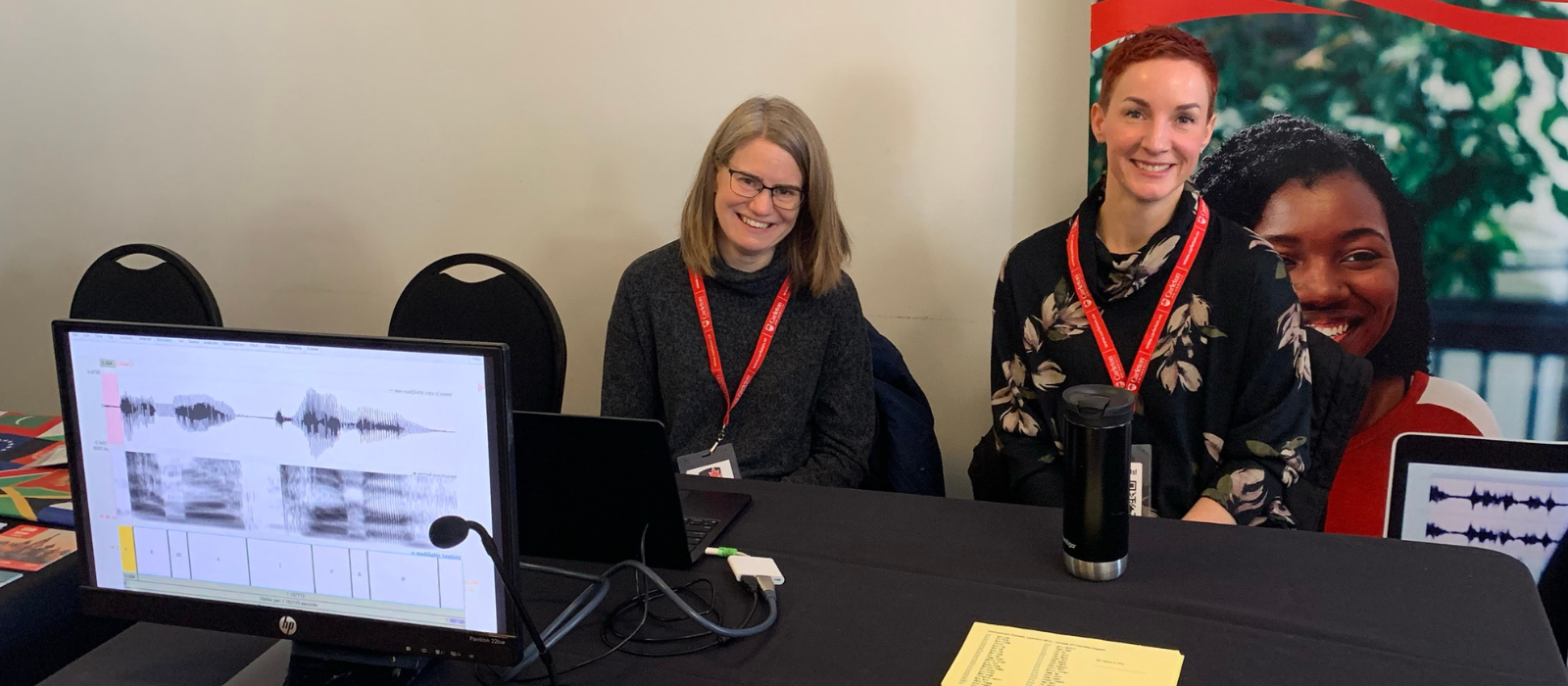
Core Linguistics Faculty
The following are the core Linguistics faculty members with their areas of specialization.
| Name | Research Interests |
|---|---|
| Erik Anonby | Language mapping, language documentation, language and identity, endangered languages, languages of Iran, suprasegmental phonology, orthography, ethnobiology |
| Lev Blumenfeld | phonology; formal grammar; documentation; Oceanic |
| Masako Hirotani | psycholinguistics, neurolinguistics, syntax-phonology and semantics-phonology interfaces |
| Karen Jesney | phonology, phonological acquisition, learning theory |
| Beth MacLeod | phonetics, sociophonetics, phonetic variation; acoustics; perception; production; Spanish |
| Kumiko Murasugi | experimental syntax, syntactic theory, Inuktitut, Japanese, aphasia studies |
| Jaffer Sheyholislami | sociolinguistics, systemic functional linguistics, Kurdish language and linguistics |
| Nadeem Siddiqi | morphology, metatheory, grammatical architecture, English (diachrony and synchrony) |
| Tamara Sorenson Duncan | second language learning in childhood, autism, developmental language disorder |
| Ida Toivonen | syntax, lexical semantics, morphosyntax, Finno-Ugric and Scandinavian languages, phonetics |
Faculty in Other Departments
| Name | Research Interests |
|---|---|
| Randall Gess (French) | phonology, phonetics, historical linguistics, second language acquisition, Romance languages |
| Shane Hawkins (College of the Humanities) | historical linguistics, Indo-European languages (Greek, Latin, Anatolian, Indo-Iranian, Old Norse) |
| Olessia Jouravlev (Cognitive Science) | psycholinguistics. neurolinguistics, bilingualism and multilingualism, individual differences in linguistic abilities, language disorders |
| Carmen LeBlanc (French) | language variation and change across time and space, French, variationist sociolinguistic, dialect contact, morphosyntax |
| John Logan (Psychology) | speech perception, word recognition, audio-visual integration of speech perception |
| Robin Norris (English) | Old English and history of the English language |
| Rajvinder Singh (Cognitive Science) | semantics, pragmatics, psycholinguistics, philosophical logic. |